

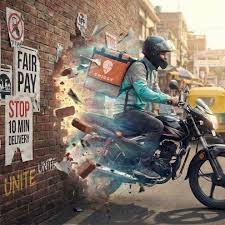
Gig Workers Left in Lurch by Bengal Bike Ban
Calcutta — As West Bengal hurtles toward the final phases of an intensely contested Assembly election, a new flashpoint has emerged—not between political rivals, but between the Election Commission’s (EC) rigid security protocols and the survival of the city’s burgeoning gig economy.
The EC’s recent directive, aimed at curbing “motorcycle-borne intimidation,” has effectively paralyzed the livelihoods of over 40,000 commercial bike riders in Calcutta and surrounding districts. The mandate, which bans motorcycles between 6 PM and 6 AM starting 48 hours before polling and prohibits pillion riders during the day, has been slammed by critics as a tone-deaf display of bureaucratic overreach that ignores the economic reality of the working poor.
“A Blow to the Poor”
Chief Minister Mamata Banerjee wasted no time in turning the administrative order into a political rallying cry. Addressing a crowd at Satyanarayan Park in Burrabazar on Tuesday, Banerjee launched a scathing attack on the poll panel, labeling the move as “evil” and “mischief.”
“How will you go home if there are no bikes? Many work; they live in far-off villages,” Banerjee told the rally. “This is not a diktat, but badmashi (mischief). This is shaytani (evil).”
Livelihoods in the Crosshairs
For the thousands of delivery agents and bike-taxi riders who form the backbone of the city’s logistics, the “free and fair” election comes at a steep personal cost, according to a report in The Telegraph..
Shankar Ganguly, an app-bike rider from Haridevpur, exemplifies the human toll of the policy. With a wife battling cancer and a daughter suffering from thalassemia, Ganguly relies on his daily earnings of ₹1,000 to cover medical bills.
“We were not prepared for this,” he said. “How will I foot the bills without income for two days?”
Similarly, Swapan Kumar Koyal of Sonarpur, the sole breadwinner for his college-going daughter, wife, and mother, described the two-day forced hiatus as a “huge blow.” For delivery agents like Avijit Sardar, who earns a mere ₹15 per parcel, the ban on his primary tool of trade during the high-volume evening hours effectively wipes out his week’s margins.
The Policy Gap: Security vs. Subsistence
The Election Commission defended the move as a necessary measure to “prevent source jamming” and ensure “violence-free elections.” However, the execution has left both the public and law enforcement in a state of confusion.
The EC’s “Sliver of Hope” vs. Reality:
- The Rule: Exemptions can be sought from local police stations for “medical emergencies” or “family functions.”
- The Reality: Senior Kolkata Police officers admit they are “clueless” about the criteria.
- The Missing Link: The circular fails to specify what documents are required, leaving riders at the mercy of individual officers’ discretion on the ground.
As the temperature rises—both meteorologically and politically—the EC’s decision highlights a growing friction: the struggle to secure a democracy without disenfranchising the very workers who keep the state’s economy moving. For now, Calcutta’s gig workers are left wondering if the price of a “peaceful” election is their ability to put food on the table.
THIS POST IS PREPARED FROM AVAILABLE MATERIAL BY NEWSNET INTERN SHIKHA ROYCHOWDHURY

Poll Panel Diktat or ‘Bureaucratic Mischief’? added by NEWSNET DESK on
View all posts by NEWSNET DESK →