

Yogendra Yadav wrote this piece in Hindi. We carry a simple translation for our readers.
The fundamental lie in the Special Intensive Revision (SIR) of the voter list has been caught. This lie was exposed by a document that the Election Commission had been hiding for the past three months.
This document is the final guideline for the intensive revision of Bihar’s voter list in 2003.
The story goes like this: Ever since the SIR order came in Bihar, the Election Commission has been repeating the same line—”We are only doing what was done in 2003. What’s new about it? Why are you objecting?”
But surprisingly, the Election Commission never made the 2003 file public.
It wasn’t even attached to the 789-page affidavit filed in the Supreme Court. When the question was raised during the court hearing—”Okay, show us what you did in 2003?”—the Commission went silent.
When transparency activist Anjali Bhardwaj sought a copy of this order through RTI, the Election Commission gave no response. And when journalists asked, sources from the Election Commission replied that the file was lost. It was clear that the Election Commission was hiding something, but no one had the correct information.
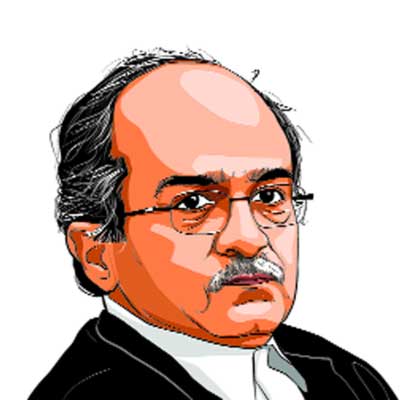
Finally, this game of hide-and-seek ended, and last week, Supreme Court advocate Prashant Bhushan presented this document in the Supreme Court. This 62-page document, issued by the Election Commission on June 1, 2002, is now public.
After reading it, it becomes clear why the Election Commission was suppressing this document—because what is written in it refutes all three of the Election Commission’s basic claims regarding SIR.
The Election Commission’s first lie is that in 2003, all voters filled out enumeration forms or enumeration papers.
Not only that, the entire process was completed in 21 days last time. On the same lines, forms were filled this time too, and a full one-month period was given. But the 2003 guideline tells a different story. This document makes it clear that in 2003, no voter was asked to fill any enumeration form.
In those days, instead of BLOs (Booth Level Officers), there were enumerators as local representatives of the Election Commission. They were instructed to go door-to-door and make revisions to the old voter list. The revised list was rewritten afresh, and the head of the family was made to sign it. For ordinary voters, there was no form, no time limit, and no fear of automatic deletion from the list for not filling the form.
In other words, there was no precedent for what happened in SIR this time.
The Election Commission’s second lie is that the document requirements in 2003 were very strict—back then, voters were given options of only four documents, whereas now 11 documents are being accepted.
But the guideline reveals that in 2003, no documents were asked from anyone. Documents were only required from those who had come from another state and were registering their entire family to vote for the first time. Or from those suspected of not stating their age correctly or giving a wrong usual residence.
In other words, last time, except for a few exceptions, no one was asked for any documents; there was no universal document verification.
In complete contrast, in SIR, every person was asked for some paper or the other—either proof of name in the 2003 voter list or one of the 11 documents. It was fortunate that later the Supreme Court added Aadhaar card to that list.
The Election Commission’s third and biggest lie is that citizenship verification happened in 2003.

The Election Commission claimed that the people in the 2003 voter list had their citizenship already checked. That’s why documents are now being asked from the remaining people. Here again, the old document exposes this lie. There was no provision in these guidelines for checking the citizenship of all voters.
On the contrary, paragraph 32 of the old guideline clearly states that it is not the enumerator’s job to check citizenship. According to the previous order, citizenship proof could only be asked in two situations: Either in an area that the state government had declared as a ‘foreigner-dominated area.’
If a new person came to register to vote in such an area and no family member had a vote, then their citizenship could be checked. Or when a written objection came against someone that they are not an Indian citizen. In that case, the objector had to provide proof that the person is a foreigner. Beyond that, no one’s check was done, and no one’s name could be deleted on that basis. The old guideline clearly states that if someone’s name is in the pre-established voter list, it should be given weight.
This time, the Election Commission took upon itself the task of identifying foreigners. Last time, this responsibility was with the government, not the Election Commission.
This means that the Election Commission’s claim that it is repeating the 2003 intensive revision process in SIR has been proven to be a complete lie.
Not only that, the provision by the Election Commission to exempt electors included in the 2003 voter list from documents has also been proven baseless. Now, it remains to be seen what arguments the Election Commission comes up with in favor of SIR in other states after Bihar.
THIS ARTICLE WAS TRANSLATED VIA AI, AND PRESENTED HERE IN THE INTERESTS OF DISSEMINATION OF RELEVANT VIEWPOINTS. THE VIEWS EXPRESSED HERE ARE ENTIRELY THOSE OF MR YOGENDRA YADAV’S AND ARE NOT NECESSARILY SHARED BY NEWSNET ONE , ITS EDITOR OR TEAM MEMBERS.

‘Missing File’ shows Election Commission’s Big Lies! added by NEWSNET DESK on
View all posts by NEWSNET DESK →