

Frank Krishner looks at the Assam Assembly Elections in this series.
Tamulpur, in the Bodoland Territorial Council area, is heading into a tense election with an unsettled mood. Every vote here carries the heavy weight of past sacrifices, violence, and decades of Bodo struggle.
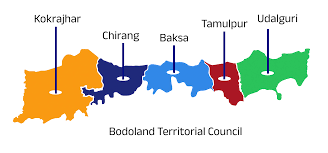
In the 2026 Assam Assembly polls, the 43-Tamulpur (ST) seat is shaping up for a sharp contest between UPPL’s Pramod Boro and BJP’s Biswajit Daimary.
This isn’t just another ST constituency — it’s a mirror of the Bodo people’s long journey. The 1993 and 2003 Accords created the Bodoland Territorial Council under the Sixth Schedule, moving the fight from the streets to the halls of power. Peace brought relief — no more fear for children going to school — but the memories didn’t disappear; they just sank deeper.
Bodo politics is changing. Leaders have gone from movement icons to ministers and coalition partners. The UPPL, born after the 2020 Peace Accord, now finds itself in an awkward position — a Bodo regional party that sometimes allies with the BJP, a force many older families once saw as distant and Delhi-centric.
At the same time, the splits among Bodo leaders — between BPF, UPPL, and BJP-aligned groups — have weakened the old idea of a united Bodo front. The once-clear line between Bodo regionalism and national integration has blurred. What used to be about core rights and identity has increasingly become about power-sharing, seat adjustments, and election-time deals.
The unease is clear: those who died didn’t sacrifice so Bodo faces could sit in power while others pulled the strings. The real worry isn’t the fading of Bodo identity, but its slow transformation into a bargaining chip in seat deals.
After 2020, Pramod Boro’s UPPL formed a coalition with the BJP and GSP. It was praised for bringing calm and development talk, but criticised for turning the old student-movement spirit into a managerial arm of the BJP’s NDA agenda. For many, those years felt like “Bodo autonomy on contract.”
In the 2021 by-election, UPPL’s Jolen Daimary won big on a wave of Bodo pride and stability. For 2026, however, the party has fielded Pramod Boro himself, signalling that Tamulpur is far more than a regular seat — it’s a symbol of the entire Bodo political project.
Biswajit Daimary isn’t an ordinary candidate. A veteran of the Bodo movement, former Rajya Sabha MP from the BPF, and longtime fighter for autonomy, his joining the BJP in 2020 was a major shift. It showed Bodo leaders aligning with a national, Hindu-majoritarian party while still claiming to guard Bodo interests.
This leaves Tamulpur voters with a tough question: If the BJP needs Bodo leaders to win, do those leaders still need strong Bodo sub-nationalism to govern? And if UPPL joins the BJP again after the polls, was the vote really for autonomy — or just for a Bodo face in a BJP setup?
For younger voters, “Bodoland” no longer means conflict and blockades. It now stands for jobs, roads, education, and dignity within India. Yet divisions among Bodo leaders (BPF, UPPL, and BJP-aligned groups) have weakened the old united front. What was once about core identity and rights has increasingly become about power-sharing and seat adjustments.
Voters are confused for three main reasons: their shared history, the identity question, and the uncertainty of post-poll alliances.
People here have lived through many chapters of the Bodo story — the violent days of the movement, the hope mixed with disappointment during the BTC years, and now the post-2020 phase of alliances and shifting loyalties. Each phase has left its scars. Some still carry memories of the 1990s with police camps, rallies, and funerals. Others see the 2020 Bodo Peace Accord as a much-needed relief. Then there’s the younger generation voting for the first time — for them, “Bodoland” isn’t lived experience, just stories passed down.
Second, Bodo identity itself feels like it’s up for negotiation. The BJP’s rise in the BTR hasn’t erased it, but it has turned it into a bargaining chip. When Biswajit Daimary campaigns, he speaks as a genuine Bodo leader, raising both pride and old grievances. Yet he does so under the banner of a party many view as putting majoritarian interests above tribal autonomy. This creates a quiet inner conflict for voters.
Third, there’s the constant shadow of post-poll alliances. The Bodo People’s Front, who fought against the BJP in the council elections, are now partnering with it. The biggest doubt is simple: “What if UPPL teams up with the BJP again after the election?” Even though the party walked out of the NDA in 2026 over seat-sharing disputes, its history of partnering with the BJP is still fresh.
Voters know the pattern well — rivals during the campaign often become friends once the results are out. If that happens again, their vote may feel meaningless — just a formality rather than a real stand on identity or autonomy.
There’s no single answer on who Tamulpur will choose. Older voters may lean towards Pramod Boro, seeing him as rooted in Bodo aspirations. Others may back Biswajit Daimary for better access to central power and development, even if it means compromise.
At its heart, this election is a test of Bodo political identity. Voters must decide: Are they voting for real emotion and memory, or accepting a softer, more domesticated version of their struggle?
Tamulpur isn’t just choosing a winner — it’s choosing how much of its past will shape its future.

Tamulpur result hinges on Bodo Identity and Aspirations added by FRANK KRISHNER on
View all posts by FRANK KRISHNER →