

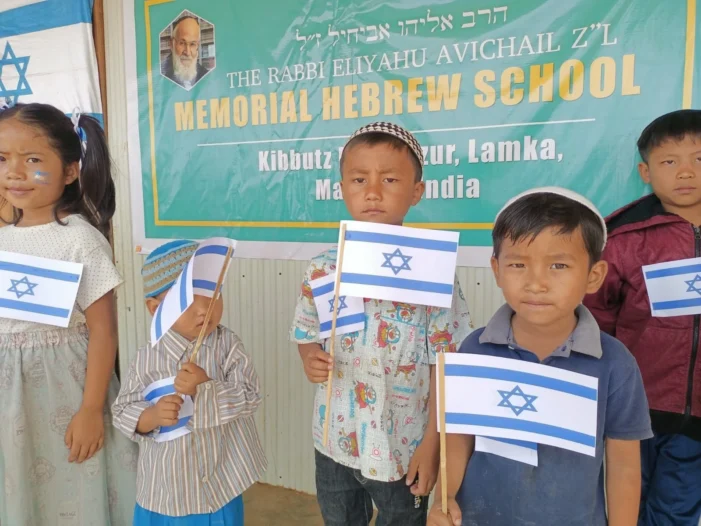
In the midst of the cacophony around bhel puri and political betrayals, the new surge of violence in Manipur is almost muted.
Here’s another slice of news that you might not have tasted.
A few days ago, (late April 2026), some 240 Kuki tribals, members of the B’nei Menashe, enthusiastically touched down at Ben Gurion Airport.
This touchdown marks the beginning of “Operation Wings of Dawn”—a final, accelerated push by the Netanyahu government to relocate the ‘remaining’ 6,000 members of this “Lost Tribe” of Biblical Israel from Northeast India to Israel by 2030.
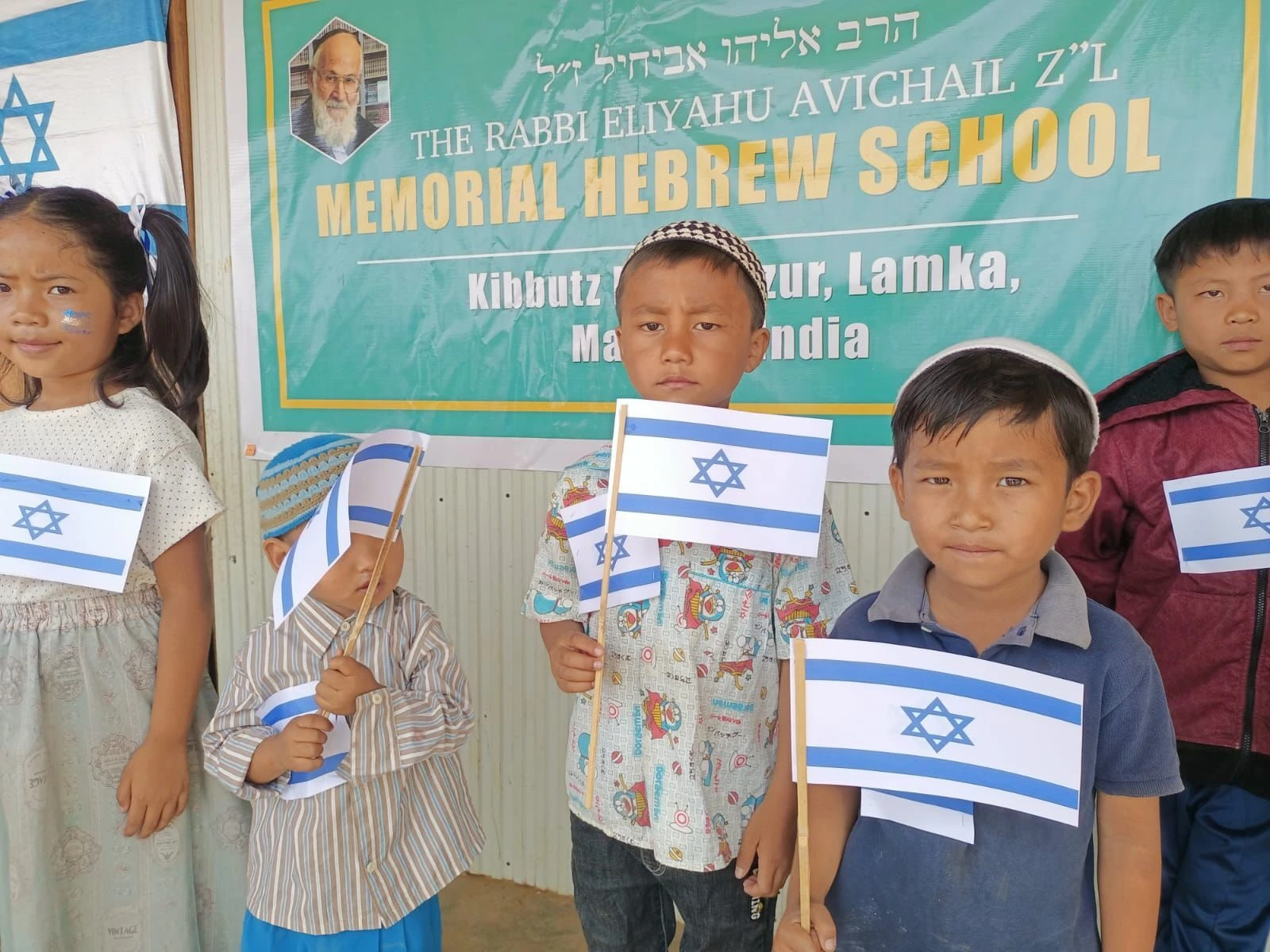
Under the plan, approximately 1,200 community members are expected to emigrate to Israel by the end of 2026.
No doubt, the imagery at the airport was of joyful reunification. The reality for the B’nei Menashe is in fact, a complex narrative of survival. They are caught between the ethnic volatility of Manipur and the demographic and labour demands of a war-weary Israel.
The Manipur Crucible: Ethnic Identity as a Target
The B’nei Menashe belong to the Kuki-Zo ethnic group, a community that has been at the centre of a brutal ethnic conflict in Manipur since May 2023.
In the eyes of the Meitei majority, the Kuki-Zo are often framed as “illegal immigrants,” a narrative that has gained traction within the shifting political landscape of the Modi dispensation’s “New India.”
For the B’nei Menashe, who are a sub-cultural minority within the Kuki-Zo population in Manipur- Mizoram this conflict has been existential:
Displacement: A significant number have been living in relief camps for nearly three years, their homes in the Imphal Valley razed.
Targeted Identity: Synagogues in districts like Churachandpur have been vandalized or burnt, not necessarily because they were Jewish, but because they were Kuki.
A “Convenient” Exit: For the Indian state which is obviously struggling to contain a civil-war-like situation, the departure of a minority group—especially one with an “ancestral” claim elsewhere—offers a quiet relief to the demographic tension, even if it highlights the diminishing space for pluralism.
The Israeli Calculus: Zionism and the Labour Gap
Now, when you put things in perspective, the timing of Netanyahu’s “speeding up” of Aliyah (migration) is highly strategic.
Since the events of October 7, 2023, and as this Trump-Netanyahu led war spins out of control, Israel has faced a severe labour crisis due to the suspension of Palestinian work permits and the exodus of foreign agricultural workers.
Filling the Void: Many B’nei Menashe who arrived in previous waves have found work in sectors like construction, trucking, and manufacturing—the very sectors currently crippled by labour shortages.
Some B’nei Menashe have gained jobs as soldiers, and young men of the community have served in Israeli combat units. Many family members of earlier immigrants join the Israeli army.
Learning Hebrew has been a great challenge, especially for the older generation, but younger members have had more opportunities to learn Hebrew, as they are more involved in Israeli society.
Repopulating the North: The 2026 arrivals are being funnelled into “absorption centres” in Nof HaGalil and other northern cities. These areas have been devastated by years of rocket fire from Lebanon and have seen significant internal displacement. Using the B’nei Menashe to “strengthen the Galilee” serves both a Zionist ideological goal and a practical demographic one.
Frontline Living: There is a bitter irony in this “escape.” Many B’nei Menashe are fleeing ethnic riots in Manipur only to be settled in Israeli border towns that are frequent targets of Hezbollah or Hamas rockets.
The Fate of a Minority
The fate of the B’nei Menashe appears to be one of permanent transition. They are a community that has spent 2,700 years (by their tradition) searching for a home, only to find that their acceptance in both India and Israel is frequently conditional.
“India is our birthplace, but Israel is our destiny,” remarked one new arrival this week.
However, the “destiny” currently offered is one of high-risk integration.
The new ‘Israelis’ are certainly not considered kosher. In Israel, they often face a “second-class” status during their lengthy ‘conversion’ processes. They will need to be integrated into the Rabbinic Judaism framework. These Kuki Jews are frequently placed in the most volatile geographical and economic positions.
Strange, we are not saddened by their leaving. Their departure is a silent testament to the failure of ethnic reconciliation in the Northeast. A shrinking of India’s great ‘unity in diversity’, bit by bit.
As I see it, the B’nei Menashe are moving from a “forgotten war” in the hills of Manipur to the “forever war” of the Middle East.
Whether this transition constitutes a “rescue” or a “reassignment” depends entirely on whether one views them as returning exiles or as convenient demographic assets in a broader geopolitical game.

From One Frontline to Another: The Double Exodus of the B’nei Menashe added by FRANK KRISHNER on
View all posts by FRANK KRISHNER →