


A translation of a Hindi article by Yogendra Yadav. The original can be accessed here.
After the Bihar election results, many colleagues asked me :- what is the point of contesting elections now? If in every election, ultimately, the BJP is made to win and the opposition is completely wiped out, then what is the benefit of participating in such elections and giving them legitimacy? Why doesn’t the opposition just boycott the elections? I did not agree. But their questions are serious.
Most of those asking are ordinary citizens, intellectuals, or activists who are not affiliated with any party but are connected to the democratic system and its dignity, and are concerned about the future of our republic.
This question is not the mischievous product of an idle mind. The continuous erosion of our democracy compels these people to ask such questions.
Like many other established democratic systems in the world, India has now reached a point where it cannot even be called a normal democracy or a flawed democracy. It is not the old-style dictatorship either, which involved martial law and censorship.
In the 21st century, a new model of authoritarianism has emerged, where the institutions, dignity, and traditions of the democratic system are dismantled, but the ritual of elections is kept intact. The compulsion to show that the ruling power has the support of the people keeps electoral competition alive.
Elections become like an obstacle race for opposition parties, where they face hurdles or slips at every step. But if they manage to cross it, they can win the election. Due to the need for the approval of the people, it must be ensured that elections do not become a complete farce and can be presented as a mirror of public opinion. Winning any election is a tough nut to crack for government opponents, but not impossible.
In such a situation, at some point, this question arises – what is the logic in participating in this obstacle race? Why not boycott the elections and expose this ritual of stamping public support on authoritarian power? The answer to this question is not easy.
Since the entire game of holding elections is about gaining legitimacy, the real issue is how the public will view such a decision. Will it be seen as rejecting a fixed match, or as an escape by a losing player?
Therefore, any such decision must be tested on two criteria. First, has every possible effort been made to win this obstacle race? Is the public seeing that the opposition has successfully done whatever was possible to gain public support? Second, is it clear that there was rigging in the election results? Does the public understand that the election results do not represent the true sentiments of the people?
The Bihar election does not fully meet these two criteria. That is, demanding an election boycott based on the Bihar election does not seem right.
First, consider the opposition INDIA alliance election preparations and campaign. Every person knowledgeable about Bihar politics knows that the opposition has been facing two basic challenges for a long time.
One is that the NDA’s social equation is much stronger compared to the INDIA alliance. The ‘Mahagathbandhan’ relies on solid Muslim-Yadav support and loose support from castes like Ravidas and Mallah, which together make up about 40-42 percent of Bihar. On the other hand, the NDA has upper castes, plus Kurmi, Kushwaha, Paswan, and a large number of Hindu extremely backward castes mobilized in its favour, whose population is more than 50 percent.

To win the election, the opposition’s first responsibility was to try to string together backward-Dalit-marginalized societies and the poor, and expand its social alliance. But it could not do so. On the other hand, the opposition faced the challenge of erasing the stain of ‘jungle raj’ on RJD rule and presenting a meaningful agenda to the state. In this sense too, the INDIA alliance could not do anything concrete and significant.
Meanwhile, the Nitish Kumar government has continued efforts over several elections to tilt women towards itself and strengthened its side by giving gifts like pension increases, honorarium hikes, and electricity bill reductions to women and many other sections before the elections. In such a situation, the NDA’s victory was not very surprising.

Talking about election boycott based on such an election will not go down well with the people of Bihar. During and after the Bihar elections, there were many complaints of rigging. There is no doubt that the Bihar election was an example of systemic dishonesty. Removing 68 lakh names from the electoral rolls and adding 24 lakh names, allowing women to be given Rs 10,000 as a bribe after the code of conduct was imposed, assigning those same ‘Jeevika Didis’ to election duty, running special trains from other states to Bihar for BJP supporters, the media’s day-and-night propaganda for the NDA and venom-spewing against the Mahagathbandhan – these few examples are sufficient to prove systemic discrimination.
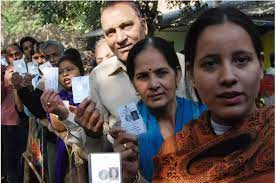
From start to finish, the election was an obstacle race for the INDIA Alliance. But at present, in a minimal sense, there is no solid evidence of electoral rigging. That is, complaints have come in Bihar that there was rigging in votes, voting figures were inflated, and there was a surprising increase in the number of seats, but there is no concrete proof of this. It is not right to make claims on such a sensitive issue without evidence.
If more evidence emerges later, that’s a different matter; for now, apart from the Mahagathbandhan’s staunch supporters, not many people will be ready to believe that the NDA formed the government based on theft.
In the current situation, demanding a vote boycott based on the Bihar election raises the risk of repeating the boy-who-cried-wolf story – when the wolf actually comes, no one will be ready to believe it.
Yogendra Yadav is National Convenor, Bharat Jodo Abhiyaan | Member, Swaraj India | Swaraj Abhiyan| Jai Kisan Andolan

Is it time to start boycotting Elections? added by NEWSNET DESK on
View all posts by NEWSNET DESK →